
HoLEP · Enlarged prostate · Ecuador
Holmium Laser Enucleation of the Prostate (HoLEP)
Laser surgery for an enlarged prostate. With urologist Dr. Pablo Benenaula in Ecuador's Chillos Valley, just outside Quito.
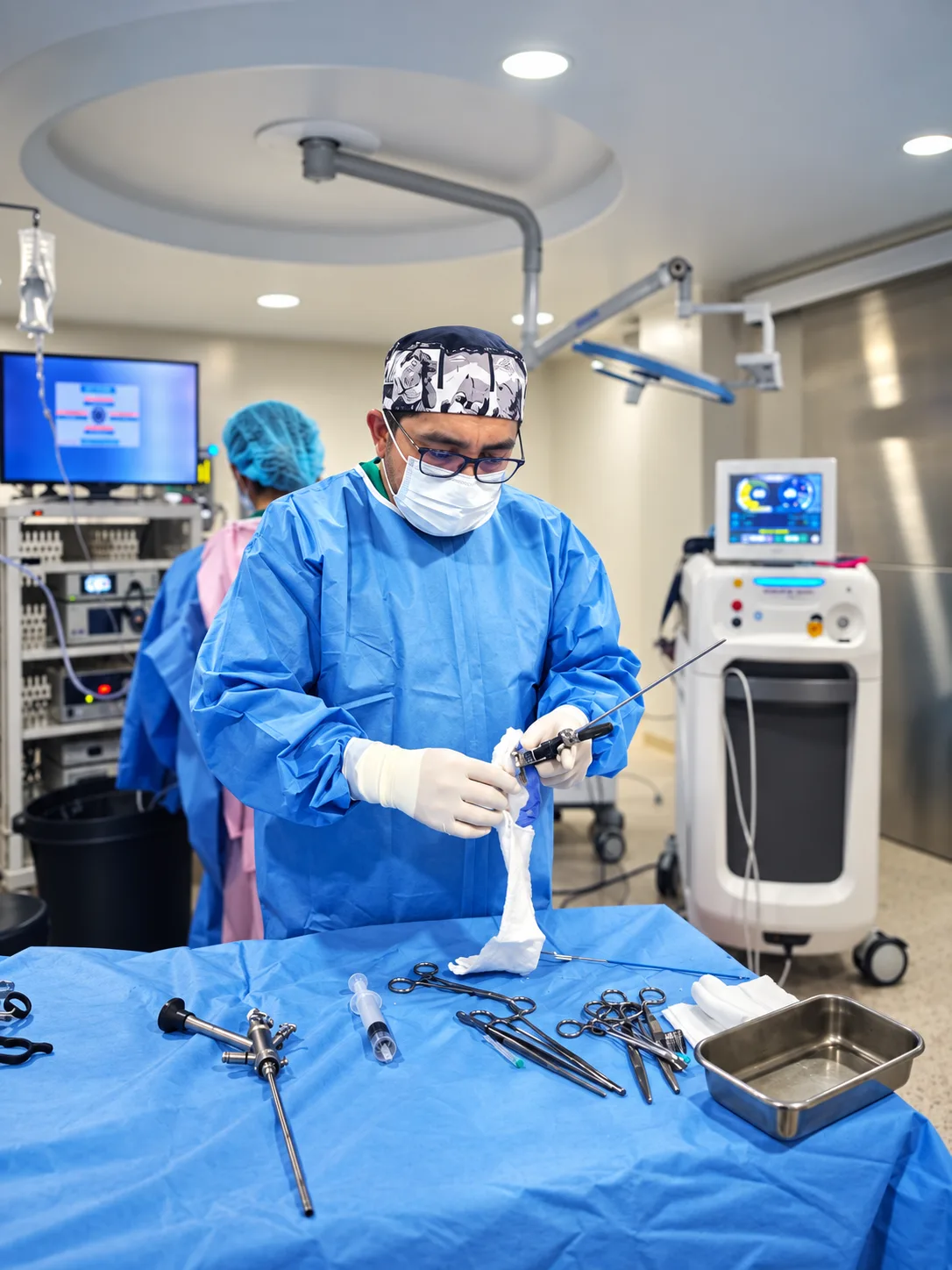
I'm Dr. Pablo Benenaula, a urologist. HoLEP is the operation that sets my practice apart, and I have been performing it for more than five years. Before surgery, we sit down together at a consultation: I explain calmly what you have, we measure your prostate and I answer all your questions. After that, the same team that operates on you looks after you from your first visit to your last checkup.
- Experience
- More than 5 years
- performing HoLEP
- Technique
- No incisions
- endoscopic, outpatient surgery
- Team
- One team
- from first visit to final checkup
- License
- Licensed in Ecuador
Hard to find at home?
In much of the US, HoLEP is still hard to find. A study published in 2025 found that in 2022 only about 151 surgeons in the country were doing at least 10 HoLEPs a year, and about a third of states had none (Robles et al., Journal of Endourology, 2025; summary in Urology Times (opens in a new tab)).
What is HoLEP?
As men get older, the prostate grows and can squeeze the channel that urine flows through. That is BPH, or benign prostatic hyperplasia. It isn't cancer. At the clinic I see men with a weak stream, with frequent or urgent trips to the bathroom, who get up several times a night or feel that they never quite empty the bladder.
HoLEP stands for holmium laser enucleation of the prostate. Let me tell you how it's done. It is endoscopic surgery: no incisions in the skin, no stitches, no wound to look after. With the laser we work in the plane between the prostate's capsule and the adenoma, which is the tissue that has grown and is in the way, and we separate it the way you would separate the segments of an orange and leave the peel. There's no need to force the instrument: the laser's energy frees the tissue. Once it's free, we push it into the bladder and then comes morcellation: an instrument with a blade, like a kind of blender, grabs the tissue, grinds it up and suctions it out. Everything that comes out we collect and send to the pathology lab, to make sure there are no malignant cells.
The operation takes 1 to 2 hours, depending on the size of the prostate. In the majority of cases we do it under spinal anesthesia; sometimes, depending on the case, under general anesthesia. I work with a 150 W holmium laser and a 100 W thulium laser.
Who might it help?
I suggest it to men with benign prostatic hyperplasia who:
- have symptoms that bother them and haven't improved with medication, or who don't want to keep taking it;
- have had urinary retention or live with a catheter;
- have complications, such as repeated urinary infections, bladder stones or bleeding from the prostate.
Let me tell you about a case. A patient had stones inside the bladder, caused by a very large prostate. Inside one of the stones we found a surprise: a small piece of a urinary catheter, known as a Foley catheter, that he had used at some point. We can't explain how it stayed there, but the salts in the urine kept sticking to it and formed a large stone. The holmium laser lets us deal with both problems in the same operation: lithotripsy, with which we pulverize and remove every fragment of the bladder stones, and the enucleation of the prostate that was causing them.
The European Association of Urology's 2026 guidelines recommend HoLEP as an alternative to transurethral resection of the prostate (TURP) and to open surgery, including for large prostates. According to those guidelines, it relieves symptoms about as well as TURP, with less time on a catheter, a shorter hospital stay and fewer transfusions.
That is why it is the only prostate operation I perform: no incisions, less bleeding, less time on a catheter, and it works for prostates of any size. I don't perform TURP or open surgery.
What recovery is like
- It is outpatient surgery: you go home the same day, with a catheter that we remove after 72 hours.
- Burning, frequent urination and some blood in the urine are normal during the first few weeks; I tell you this beforehand so it doesn't alarm you.
- Drinking plenty of water and avoiding constipation help prevent bleeding.
The risks, in plain language
No surgery is risk-free, and I prefer to tell you about the risks beforehand and in plain terms. Here are the risks of HoLEP and how often they happen, according to the British Association of Urological Surgeons' patient leaflet (BAUS, 2023) and the medical literature:
| What can happen | How often |
|---|---|
| Temporary burning, some blood and frequent urination | Almost everyone |
| Retrograde ejaculation: semen goes back into the bladder instead of coming out. Whether it is permanent depends on each case | About 9 in 10 |
| Blood in the urine for several days | Between 1 in 2 and 1 in 10 |
| Some bleeding 2 to 3 weeks later, when scabs inside come away; usually mild | 1 in 5 |
| Temporary leakage or loss of bladder control, which usually improves within weeks to a few months | Between 1 in 10 and 1 in 50 |
| The operation may not relieve all your symptoms | Between 1 in 50 and 1 in 250 |
| Infection | 4 to 6 in 100 |
| Bleeding that needs a transfusion or a return to the operating room | Between 1 in 50 and 1 in 250 |
| Problems related to anesthesia, the heart or circulation (such as a blood clot in the legs or lungs, a heart attack or a stroke), which can be serious | Between 1 in 50 and 1 in 250 |
| Narrowing of the urethra or bladder neck from scar tissue, months later, which may need another procedure | About 2 to 3 in 100 |
| Needing another prostate operation in later years | About 5 in 100, within 10 years |
About erections: according to the European Association of Urology guidelines (2026), the effect of HoLEP on erections is comparable to that of TURP.
At your visit I explain which of these risks matter most in your case. You sign the consent form only once all your questions have been answered. The official consent form is in Spanish; I go over it with you in English.
About Dr. Pablo Benenaula
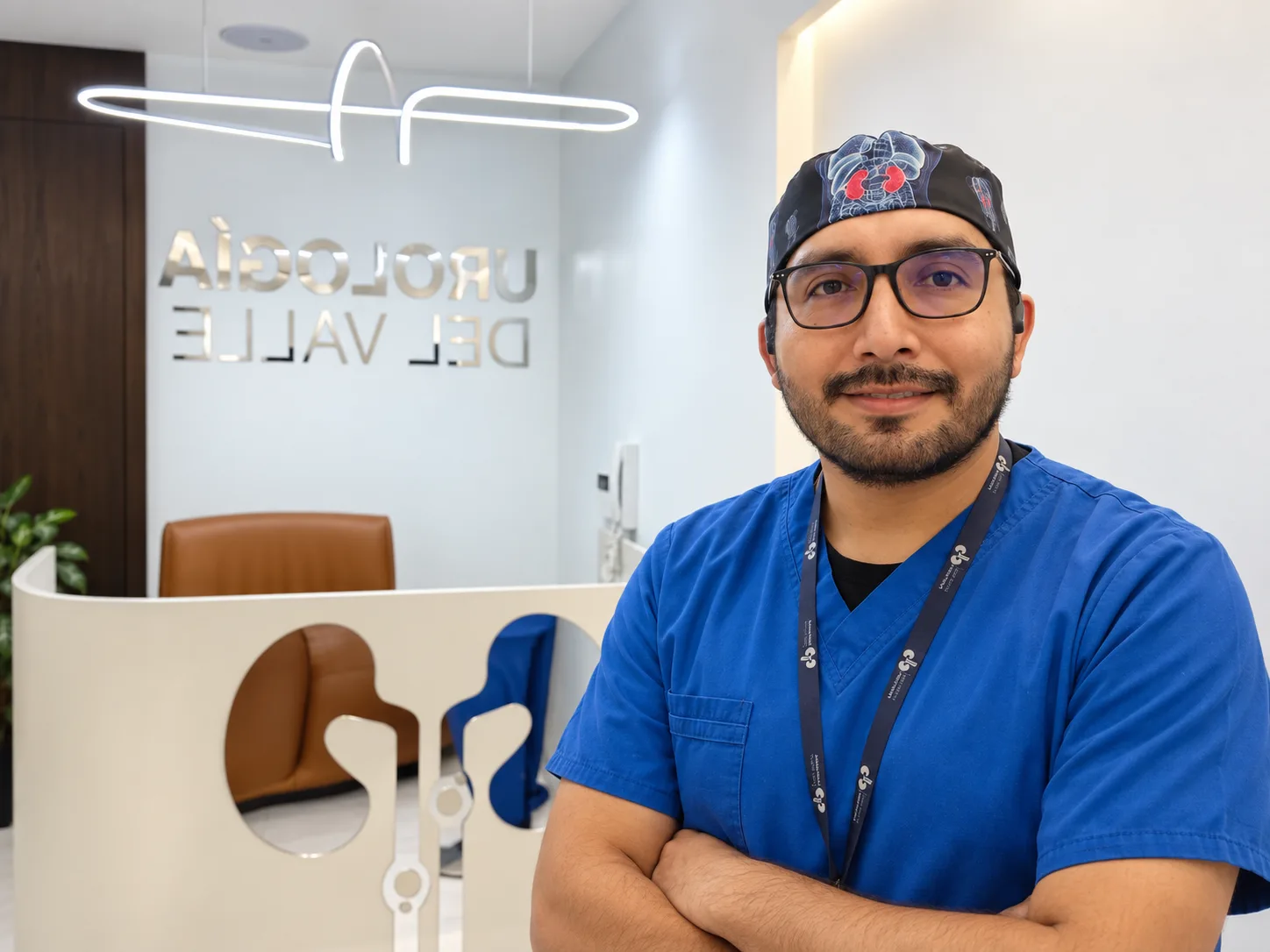
Urologist. Medical degree from Universidad del Azuay and specialist degree in Urology from Universidad Central del Ecuador. His degrees are registered with SENESCYT, Ecuador's higher education authority, with registration numbers 1033-09-944401 and 1005-2017-1865218 (public degree lookup (opens in a new tab)). He has been performing HoLEP for more than five years. He speaks Spanish and English.
He sees patients at Urología del Valle in San Rafael and operates at:
- Clínica de la Mujer, Av. Amazonas N39-216 y Gaspar de Villarroel, Quito;
- Clínica San Rafael, Av. General Enríquez e Isla Santiago, San Rafael.
Dr. Benenaula is licensed to practice medicine in Ecuador; he is not licensed in the United States.
Where we are
- Urología del Valle
- Av. General Enríquez e Isla Salango, Palazzo Venezia building, office 104
- San Rafael, Chillos Valley, Pichincha, Ecuador
- By appointment only · WhatsApp: +593 96 233 2200 · Phone: +593 99 988 0895 · Directions (opens in a new tab)
Is HoLEP right for you?
If you live in Ecuador, book a visit: I'll examine you and we'll measure your prostate.
If you live abroad, your medical consultation happens in person when you arrive in Ecuador. Before that, if your doctor would like, they can discuss your case with me. Message us on WhatsApp.
I'm Dr. Pablo Benenaula, and at Urología del Valle we care about your health.
Sources
- European Association of Urology (EAU). Management of Non-neurogenic Male LUTS, 2026 edition. uroweb.org (opens in a new tab)
- British Association of Urological Surgeons (BAUS). Holmium laser enucleation of the prostate (HoLEP), patient leaflet, 2023. baus.org.uk (opens in a new tab)
- Nam JK et al. World J Mens Health 2015;33(2):88-94 (urinary control after HoLEP). doi.org/10.5534/wjmh.2015.33.2.88 (opens in a new tab)
- Elsaqa M et al. J Endourol 2022 (urethral and bladder neck narrowing). doi.org/10.1089/end.2022.0422 (opens in a new tab)
- Long-term review of HoLEP beyond five years. BJUI Compass 2025 (reoperation). doi.org/10.1002/bco2.483 (opens in a new tab)
- Elkoushy MA, Elshal AM, Elhilali MM. Reoperation after HoLEP: 1,216 procedures followed up to 14 years. Journal of Endourology 2015;29(7):797-804. doi.org/10.1089/end.2015.0060 (opens in a new tab)
- Robles J et al. HoLEP utilization in the US, 2018-2022. J Endourol 2025; summary in Urology Times, Aug 5, 2025 (opens in a new tab).